
Offline Conversion Tracking for Phone Calls: Stop Optimizing to Dial Clicks
Published July 28, 2026
Call tracking connects phone leads to the Google Ads clicks that produced them, so you can bid toward qualified conversations instead of dial clicks.
Phone leads have a data problem that form fills don't. When someone submits a form, the conversion fires on your website, the click ID is sitting in the URL, and the loop we describe in our guide to offline conversion tracking for form fills can run end to end. When someone calls instead, none of that happens on its own. Call tracking closes the gap: it ties each inbound call to the ad click that produced it, so qualified phone conversations can feed Google Ads the same way qualified form leads do. This is the phone half of the offline conversion system. We run it for lead generation clients whose buyers pick up the phone, and we typically wire it through CallRail.
Why Phone Leads Are Invisible to Google Ads by Default
A phone lead can start in two places. The caller either taps the call button on your ad and dials straight from the search results, or clicks through to your landing page and calls the number printed on it.
Google has partial visibility into the first path and none into the second. Call assets (formerly call extensions) route through a Google forwarding number, so Google can report that a call happened and how long it lasted. What it records is a dial, not a lead. Wrong numbers count. Vendors count. Existing customers calling about an invoice count. A nine-second misdial counts. If you set "calls from ads" as a primary conversion, Smart Bidding will optimize toward people likely to dial, and dialing is a much lower bar than becoming a lead.
The landing page path is worse. Someone clicks your ad, reads the page, and calls the number on it. Without call tracking there is no conversion event at all. Google sees a click that apparently went nowhere. The keyword that produced your best phone lead of the month looks identical to a keyword that produced a bounce.
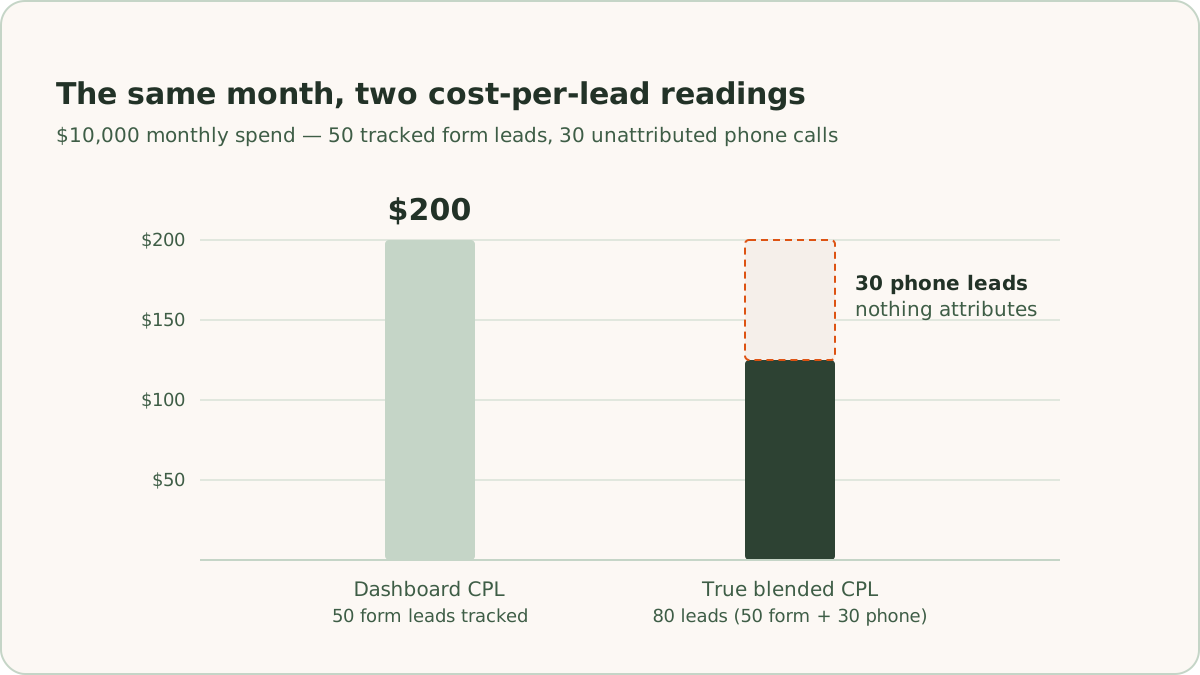
The distortion compounds in both directions. As an example, take an account spending $10,000 a month that records 50 form leads. The dashboard reads $200 per lead. If the phone produces another 30 leads that nothing attributes, the true blended figure is $125, and the keywords generating those calls are the ones most likely to get their bids cut, because on paper they produce nothing.
What Call Tracking Adds
Call tracking platforms solve the attribution problem with a few mechanisms that work together.
Dynamic number insertion (DNI). A script on your site swaps the visible phone number for each visitor. A visitor from a Google Ads click sees a tracking number drawn from a pool; a visitor from organic search sees a different one. When the call comes in, the platform knows which session dialed, because that session was the one shown that number.
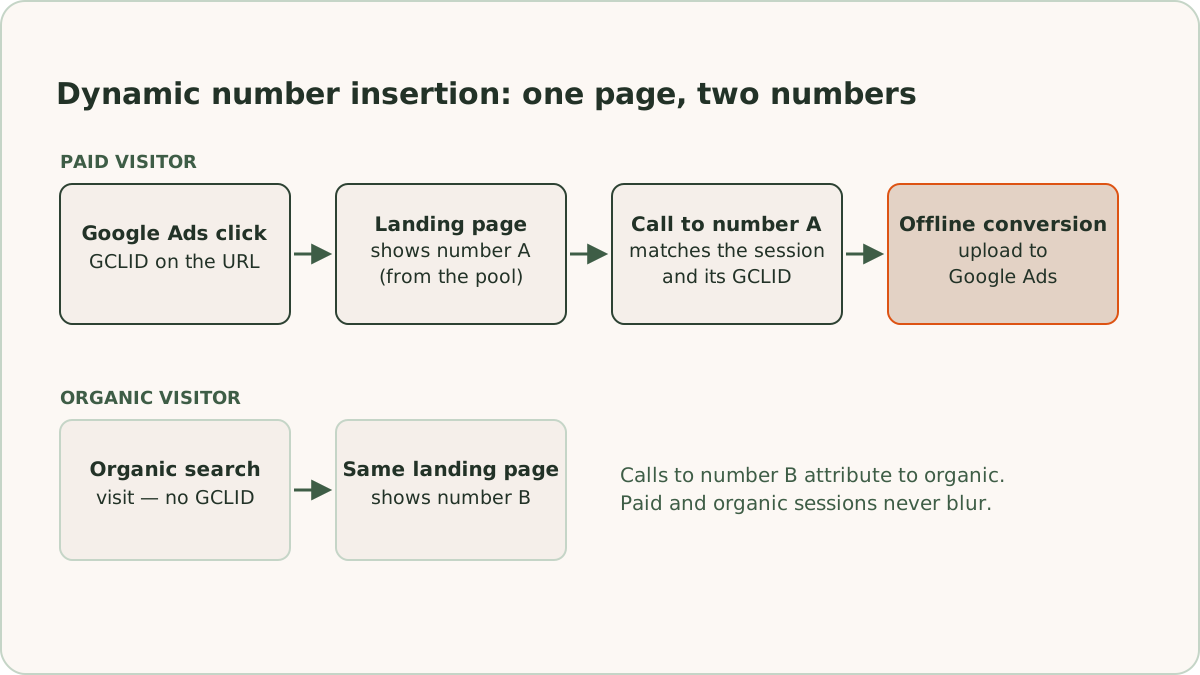
Session-level click data. Because DNI matches the call to a session, the platform can capture everything the session carried: the source, the landing page, and the GCLID that Google appended to the URL when the ad was clicked. That GCLID is what makes offline conversions for calls possible, since it is the key Google uses to match an uploaded conversion back to a specific click.
Per-source static numbers. For placements where a script can't run (a Google Business Profile, a directory listing, a printed piece), a fixed tracking number per source keeps channels separated even without session detail.
Recording and duration. Every tracked call carries a duration, and recording (where legal and disclosed) lets a human decide later whether the call was a lead. That review step matters more than any of the plumbing, as the setup below shows.
We typically run this through CallRail, and CallRail's Google Ads integration plus its Zapier support cover the export paths we need. The pattern below works with any platform that offers DNI, GCLID capture, and a way to get call data out.
How We Set Up Phone Call Conversion Tracking in Google Ads
Our setup follows the same sequence across accounts.
1. Install the DNI script sitewide. Not only on the landing page. Visitors browse before they call, and the number swap has to follow them to the contact page, the pricing page, and the footer of everything in between. A paid visitor who sees the real business line on any page can produce an unattributed call.
2. Size the number pool. DNI holds a tracking number for each active visitor session. If concurrent paid visitors outnumber the pool, two people see the same number at the same time and attribution degrades to a guess. We size the pool against peak concurrent traffic on the pages that carry the script, with headroom, and revisit it when traffic scales.
3. Verify the GCLID lands on the call record. Auto-tagging must be enabled in Google Ads, and the tracking platform must be capturing the gclid parameter from the session and storing it on the call record. We test this the same way we test form capture: click a live ad, place a call, and confirm the call record shows the click ID before building anything downstream.
4. Qualify before anything is uploaded. This is the step that separates the system from Google's native call counting. A minimum duration threshold is the first filter; as an example, screening out calls under 30 seconds removes most misdials and abandoned calls before a human ever looks. It's a crude filter, though, because a four-minute call can be a vendor and a 45-second call can be a booked appointment. The better filter is a person tagging each call: qualified, junk, vendor, existing customer. Recordings make that a fast daily pass rather than a project.
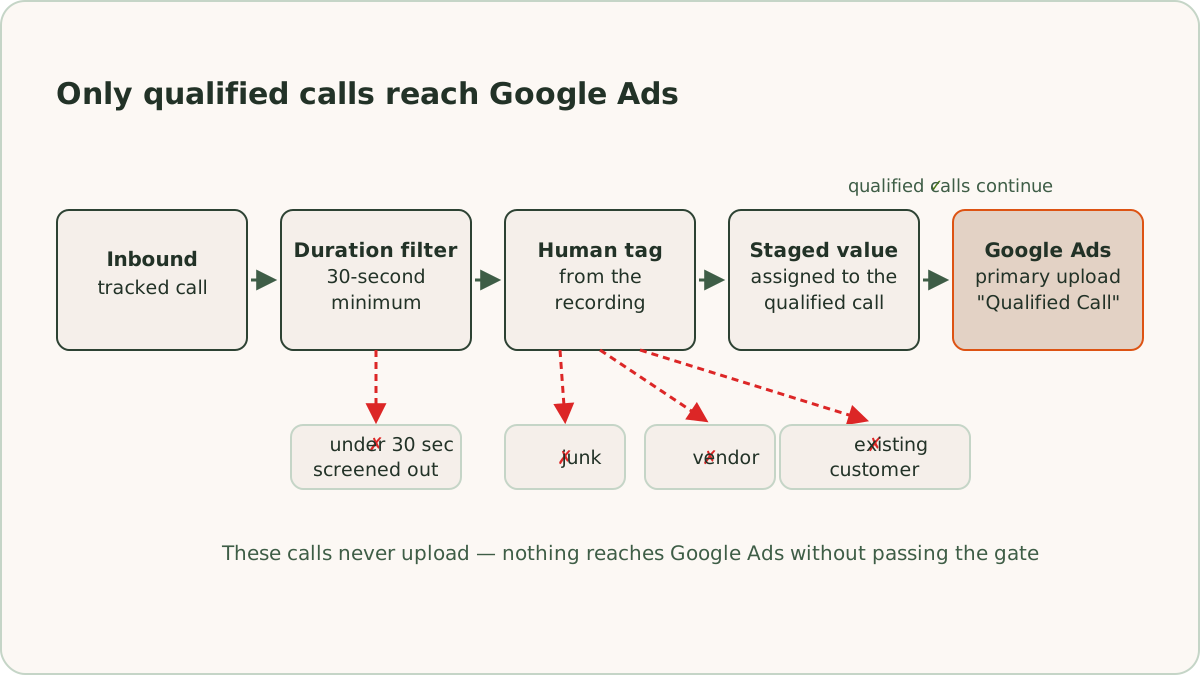
5. Assign staged values. A qualified call enters the same value ladder we use for form leads, which we cover in our guide to building a simple lead scoring model. A first qualified conversation carries a modest value, a booked appointment steps up, and a closed deal carries the real number. Phone and form leads at the same stage carry the same value, so bidding treats them the same way.
6. Upload within the click window. Qualified calls go to a dedicated import conversion action in Google Ads (named something like "Qualified Call" and matched exactly in the upload, since the match is case-sensitive), marked primary. The upload carries the GCLID, the conversion action name, an ISO 8601 timestamp inside the 90-day click-through window, and the staged value. We filter uploads to records where the GCLID exists and runs longer than 30 characters, and we allow Google's roughly 24-hour click processing period before expecting a match. We usually wire the upload through Zapier, triggered by the qualification tag.
7. Demote the dial counters. Once qualified call uploads are flowing, we move Google's native call conversions and raw call events out of the primary goal set and keep them as secondary, observation-only actions. We made this exact change on one account a couple of weeks after CallRail went live with GCLID capture: phone calls and form submissions came out of the default goals so bidding leaned on qualified lead actions instead of high-volume contact events.
One honest limitation: the call asset path from the search results page never loads your site, so DNI never fires and there is no session GCLID for those calls. For that slice we keep Google's forwarding-number conversion in place as a secondary action and accept coarser data. The qualified upload path covers every call that starts on your landing pages, which is the traffic you control end to end.
Where We Optimize Once Call Data Flows
The setup only pays off through what the data lets you change.
Bid toward qualified calls, not dial clicks. With qualified calls uploading as primary conversions alongside qualified form fills, Smart Bidding trains on conversations worth having. Expect the same reporting shift that comes with any move to qualified conversions: raw conversion counts can fall and cost per conversion can rise while cost per qualified lead improves, because the account has stopped buying cheap dials.
Find the call-heavy keywords. Some queries convert by phone at rates the form never shows. Urgent problems, complicated questions, and buyers who want a human on the line tend to dial. Law firms are the clearest example: intake runs through the phone, and the strongest cases often never touch a form. Once calls attribute to keywords, terms that looked weak on form fills sometimes turn out to be among the strongest lead producers in the account, and bids and budgets can follow that.
Align ad schedules with staffed hours. Calls cluster when people can answer, and an unanswered call is usually a lost lead: the caller moves on to the next result. Answer speed on the phone is the same discipline as speed to lead on forms, compressed from minutes to rings. Call tracking gives you the missed-call report, and the fix is often an ad schedule that concentrates call-focused campaigns into hours when someone reliably picks up.
Keep junk out of the training data. Vendors, spam, and existing customers will call tracked numbers. If those calls upload as conversions, bidding learns from them. The duration threshold catches some, human tagging catches the rest, and the standing rule is that nothing reaches Google Ads without passing the qualification gate.
Common Failure Modes
Three mistakes account for most broken call setups we inherit.
Tracking numbers pasted directly into ads. A pool number placed in ad copy or a call asset bypasses DNI entirely: no session, no source comparison, no GCLID. It also creates a durability problem, because pool numbers can be reassigned by the provider, and a number printed in an ad, a directory, or a repeat customer's saved contacts can outlive its assignment. Ads should carry Google's own forwarding setup or a dedicated static tracking number provisioned for that use, and pool numbers should never appear anywhere durable.
One static number for everything. A single tracking number across the whole site confirms the phone rang and roughly which channel made it ring. It cannot connect a call to a session, a keyword, or a click, which means nothing can be uploaded against a GCLID and bidding gains nothing. This setup usually means a number pool was never configured; it reports activity without producing usable signal.
Counting every call as a conversion. The most common one. Every dial becomes a primary conversion, the account looks productive, and the algorithm quietly optimizes toward whoever is most likely to pick up a phone, misdials and vendors included. When a sales team says lead quality is slipping while call conversions climb, this is the first thing we check.
Phone Leads Deserve the Same Loop as Forms
A lead generation account that qualifies and uploads its form fills while its phone calls go uncounted is optimizing on partial data, and for call-heavy businesses the missing part is often the larger part. Phone leads can enter the same loop, carry the same staged values, and count in the same bidding decisions; the only extra machinery is the tracking layer that gives each call a click to attach to. Building and maintaining that layer is standard work inside our Google Ads management for lead generation engagements, because bidding optimizes toward what it can see, and your best leads belong on that list.
Frequently Asked Questions
Quick answers to the questions readers ask most about this topic.
Only partially. Call assets route through a Google forwarding number, so Google can report that a call happened and how long it lasted, but what it records is a dial, not a lead: wrong numbers, vendors, and misdials all count. Calls to a number printed on your landing page produce no conversion event at all without a call tracking platform in place.
Dynamic number insertion (DNI) is a script that swaps the visible phone number on your site for each visitor. A visitor from a Google Ads click sees a tracking number drawn from a pool, so when the call comes in, the platform knows which session dialed and can capture everything that session carried, including the GCLID needed to upload the call to Google Ads as an offline conversion.
No, and counting every dial is the most common mistake in the call setups we inherit. If misdials, vendors, and existing customers upload as conversions, Smart Bidding quietly optimizes toward whoever is most likely to pick up a phone. Qualify first: a minimum duration threshold screens out most misdials, a human tags each call as qualified or junk, and only qualified calls upload as primary conversions.
Not with session-level attribution. When someone taps the call button in the search results, your site never loads, so the DNI script never fires and there is no session GCLID to capture. For that slice we keep Google's forwarding-number conversion in place as a secondary, observation-only action and accept coarser data. The qualified upload path covers every call that starts on your landing pages.

Written by
Founder & CEO, ReClick.io
Corey runs Google Ads, landing page, and email nurture programs for lead generation businesses across the United States and Canada.
Keep Reading
Lead Generation Metrics: Every Number You Need to Track (and How to Calculate Each One)
The lead generation metrics that matter, from CPC to cost per SQL, each defined with its formula and one worked example carried through the full funnel.
Offline Conversion Tracking in Google Ads: Feed Closed Deals Back Into Your Bidding
Offline conversion tracking sends closed deals from your CRM back to Google Ads so Smart Bidding can optimize for revenue instead of form fills.
How Quality Score Lowers Your Cost Per Lead (the Mechanism, Step by Step)
Quality Score is a pricing input, not a report card. See how each component changes your actual CPC and how cheaper clicks flow through to lower cost per lead.