
Speed-to-Lead: Why Response Time Is the Cheapest Conversion Lever You're Ignoring
Published June 30, 2026
Speed to lead is the time between a form submission and your first response. Here is why the first minutes decide whether a paid lead becomes a conversation.
The Lead You Paid For Is Sitting at Their Desk Right Now
Speed to lead is the time between a form submission and your first response. Someone searched for what you sell, clicked your ad, read your landing page, and handed over their contact information. Every step in that chain cost you money, and the click alone may have cost $15 or $150 depending on your market. Speed to lead measures what happens next. In most companies the honest answer is nothing, for hours.
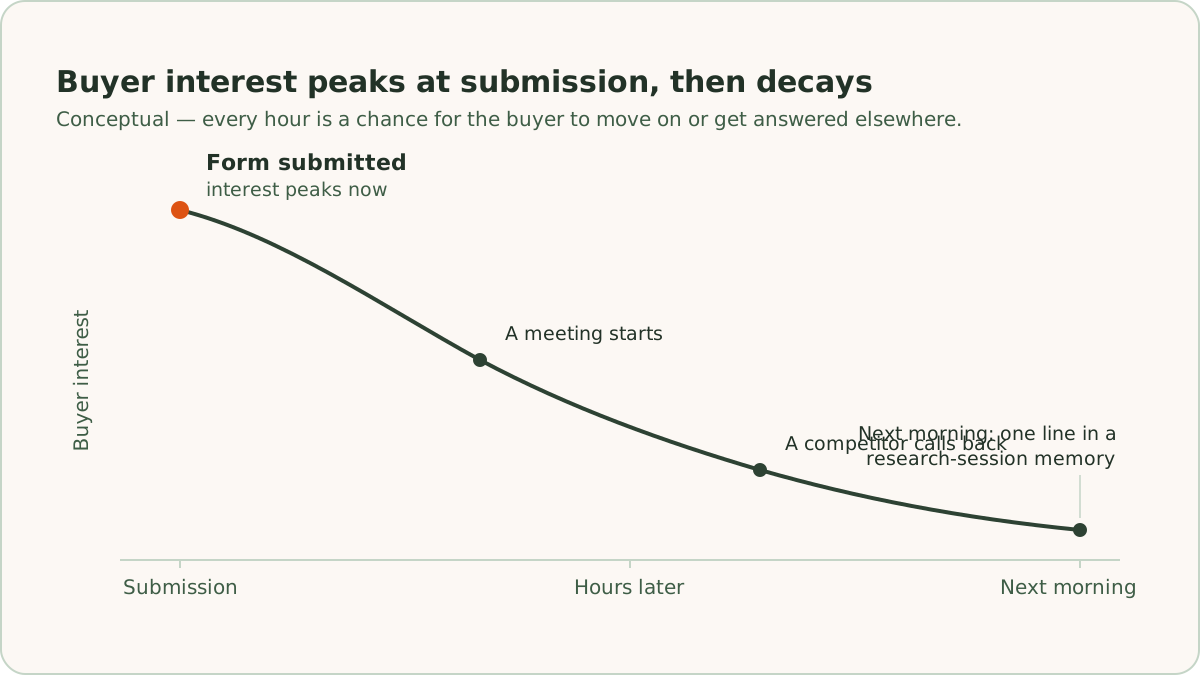
Picture the moment of submission from the buyer's side. They're at their desk with a browser open. They have a problem pressing enough to search for, and your page convinced them to raise their hand. Right now, in this minute, they are as interested as they will ever be. They are also, very likely, filling out two or three other forms in the tabs next to yours.
Nothing dramatic has to happen for that interest to fade. A meeting starts. Lunch happens. A competitor calls back. By tomorrow morning your form is one line in their memory of a research session, and the company that responded while they were still at their desk owns the conversation. Some markets compress that window to almost nothing: in real estate, a rental inquiry goes stale within hours, because the prospect books a tour with whichever listing answers first.
That is the case for speed, and it rests on how people buy, not on any response-rate study. Interest peaks at the moment of submission. Every hour of lead response time is an hour for the buyer to move on, forget, or get answered by someone else.
What Speed to Lead Means and How to Measure Yours
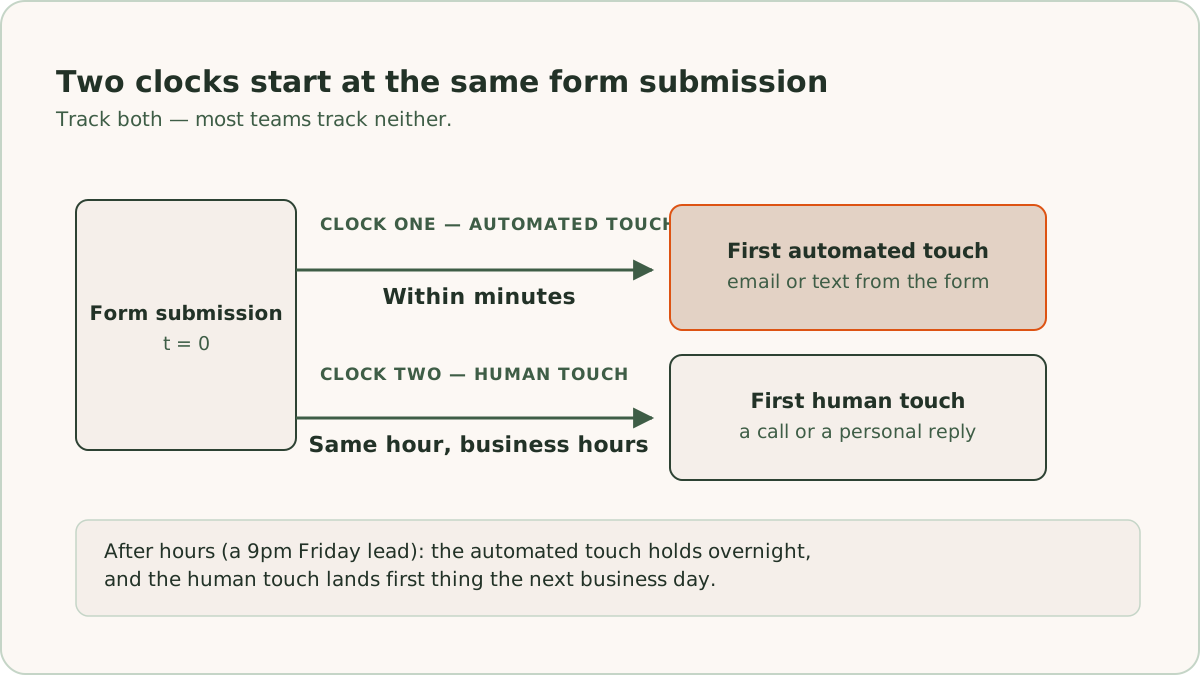
There are two clocks worth tracking, and most teams track neither.
The first clock runs from the form submission to the first automated touch: the email or text the lead receives because they filled out your form. This should be minutes. If your form only fires an internal notification and the lead hears nothing until a human gets around to it, this clock reads "never," which is worth knowing.
The second clock runs from the submission to the first human touch: a call, a personal email, a reply to whatever the automation sent. For leads that arrive during business hours, this should be the same hour. For leads that arrive at 9pm on a Friday, the realistic target is first thing the next business day, which makes the automated touch on clock one do the holding.
Measuring both is tedious but quick. Pull the submission timestamps from your form tool or CRM, pull the timestamp of the first outbound activity for each lead, and subtract. Use the median, not the average, because one lead that sat for two weeks will wreck an average and hide the fact that most leads got a response in an hour. Then segment by business hours versus nights and weekends, because those are different problems with different fixes.
A note on what counts as a touch. A bare "we have received your inquiry, ticket #4482" confirmation does not reset the buyer's clock. It confirms the form worked. A first touch that delivers something (the guide they requested, a straight answer about pricing ranges, a specific next step with a name attached) is a real response, even though a machine sent it. The difference is whether the lead has a reason to stay engaged or just a receipt.
Why Response Time Compounds Into Cost Per Opportunity
Take an example account. You spend $10,000 in a month and generate 125 leads, so your cost per lead is $80. Cost per lead is where most reporting stops, but no one buys leads for their own sake. The number that matters is what a real conversation costs.
Suppose slow follow-up means you connect with 40 of those 125 leads before they go cold. Your cost per conversation is $250. Now suppose faster response, automated first touch plus same-hour human follow-up during business hours, means you connect with 70 of them. Same spend, same ads, same 125 leads: cost per conversation drops to $143. If one in four conversations becomes a qualified opportunity, your cost per opportunity just fell from $1,000 to $571 without a single change to the campaigns.
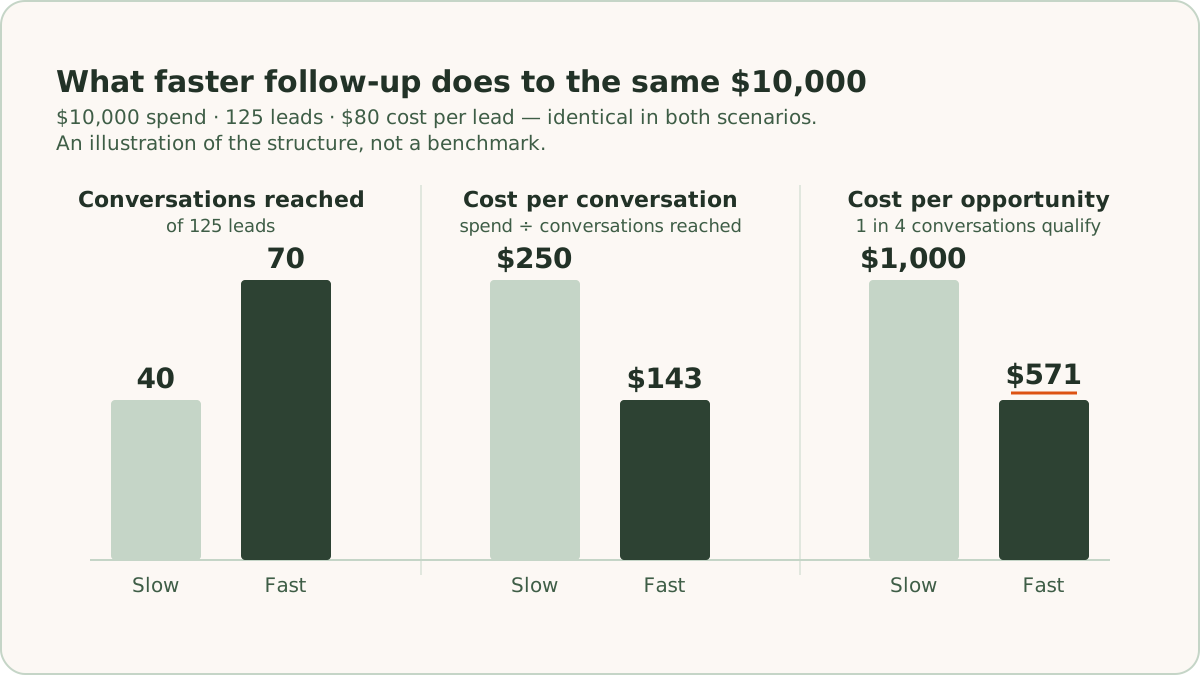
Those specific numbers are an illustration, not a benchmark. The structure of the math is the point. Everything downstream of the click divides by the number of leads you reach, so contact rate multiplies through your entire funnel. Response time is the biggest lever on contact rate, and pulling it costs nothing in media.
There is a second-order effect for anyone running Google Ads. Smart Bidding optimizes toward the conversions you feed back to it. If leads rot before anyone reaches them, they never become qualified, the qualified signal never reaches Google, and the algorithm treats the clicks as bad. It then bids away from traffic that was fine. Slow follow-up quietly corrupts the feedback loop that your bidding depends on.
Where the Minutes Go
Before fixing lead response time, map it. Take one recent lead and trace the path of the submission through your systems, timestamp by timestamp.
A typical chain looks like this. The form fires a notification email to a shared inbox. Someone checks that inbox a few times a day. They forward the lead to whichever rep seems right. The rep is in meetings until 3pm, then drafts a reply, then decides to call tomorrow morning instead. Each step is reasonable on its own. Stacked up, they turn a five-minute task into a next-day response, and nobody in the chain can see the total because everyone only owns their own segment.
The audit usually surfaces the same culprits: notifications going to an inbox instead of triggering an action, no defined owner for new leads, no automated touch covering nights and weekends, and a CRM that records when a lead was created but not when it was first worked. In some setups there's also a spreadsheet sitting between the form and the CRM, with a human copying rows across once a day. That spreadsheet is a response-time tax on every lead you buy.
Building an Instant Response System
We run email and SMS follow-up as part of the same system that generates the lead, and that is deliberate. We build the landing page, so we control the form, so we can wire the form directly into the email platform and the CRM at the moment of submission. No exports, no spreadsheet middle layer, no batch sync that runs overnight. Across the 5,000+ leads we've generated for lead generation businesses, the setup work that pays off most reliably is the plumbing between the form and everything that fires after it.
Automated First Touch Within Minutes
The first email goes out within minutes of the submission, triggered by the form itself. It's written before the campaign launches, not improvised later, and it does three jobs: deliver whatever the page promised (the guide, the pricing overview, the audit), state plainly what happens next and when, and come from a real person's name with a reply address a human reads. Where the audience expects it and consent allows it, a short SMS does the same job faster: confirmation, a name, and when they'll hear from someone.
This first touch is the top of a longer sequence, not a one-off. If the lead doesn't book or reply, the follow-up continues on a schedule instead of depending on someone remembering. We covered how to structure that in our guide to building a lead nurture email sequence.
Alert Sales in Parallel, With Priority Attached
The automation buys time. It doesn't replace the phone call. So the same form submission that triggers the lead's email also alerts the sales owner immediately, with the full form data in the notification, so the rep can decide in ten seconds whether this is a drop-everything lead or a normal-queue lead.
That decision is easier when leads carry a grade. We score leads from first inquiry onward and feed those values back into the ad platform, which means the notification a rep receives already signals how much the lead resembles past business. If you don't have a grading system yet, start with the basics in lead scoring 101; even a rough tier on the notification changes who gets called first.
Treat Readiness Timeframes as Scheduled Speed
Not every lead is ready now, and this is where most speed-to-lead thinking stops short. A lead who says "we're planning for next quarter" is not a dead lead. They're an early lead, and the worst thing you can do is let a rep chase them hard for a week, give up, and forget them.
Our practice is to capture a readiness timeframe as a field, on the form where it fits or on the first call where it doesn't: this month, next quarter, six to twelve months out. That field syncs from the CRM to the email platform as a tag, and the tag does two things. It routes the lead into nurture content matched to their stage instead of "book a call now" pressure, and it schedules an automated alert to sales when the lead reaches their stated window. A "next quarter" lead in October generates a task in January, whether or not anyone remembered.
Speed applies to nurture the same way it applies to sales. The lead's buying window opens twice: once at the original submission and again when their stated timeframe arrives. Being first matters both times, and the second one is easier to win because almost nobody shows up for it.
One detail that keeps this from feeling mechanical: when a nurture lead re-engages on their own (replies, books a call, submits another form), the flow pauses. If the deal stalls and they go quiet again, the flow resumes from where it paused rather than restarting from email one. Nobody should get the welcome email twice.
Fast Without Sounding Automated
Speed loses its value if the first touch reads like a ticketing system wrote it. A lead who receives "Your inquiry has been logged" learns that your form works. A lead who receives a plain email under a person's name, referencing the specific thing they asked about, learns that someone is paying attention.
The mechanics are simple. Write the subject line the way a person would ("your pricing question" beats "RE: Website Inquiry #201"). Use the form data: if the form asked what service they need or what their timeline is, the first email should reflect the answer, which is straightforward with dynamic fields. Ask exactly one question, the one whose answer moves the deal forward, usually about timing or scope. And keep it short, because the goal of the first touch is a reply, not a pitch.
Message consistency applies here the same way it applies from keyword to ad to landing page. The lead searched for something specific, your ad promised it, your page delivered it, and your first email should continue that same thread rather than switching to generic company voice.
Put Response Time on the Weekly Checklist
Speed to lead decays without maintenance. Forms get rebuilt and someone forgets to reconnect the automation. A rep leaves and their notification routing goes nowhere. A new campaign launches with a new form that never got wired in. The fix is boring: median lead response time, checked weekly, next to spend and cost per lead. We run weekly account checklists for exactly this reason, and follow-up plumbing is on the list because it breaks silently.
You already paid for the lead. The first minutes decide what that money becomes. An automated first touch wired directly to the form, with sales alerted in parallel and readiness windows scheduled instead of forgotten, is the cheapest funnel improvement available to you. If you'd rather have that system built and maintained alongside the campaigns that feed it, that's what our email marketing for lead generation service exists to do.
Frequently Asked Questions
Quick answers to the questions readers ask most about this topic.
Speed to lead is the time between a form submission and your first response. Two clocks are worth tracking: the time from submission to the first automated touch, the email or text the form itself triggers, and the time to the first human touch, a call or a personal reply. Most teams track neither.
The automated first touch should go out within minutes of the submission. The first human touch should land the same hour for leads that arrive during business hours. For a lead that arrives at 9pm on a Friday, the realistic target is first thing the next business day, with the automated touch doing the holding overnight.
Interest peaks at the moment of submission, when the buyer is still at their desk and very likely filling out competitor forms in the tabs next to yours. Every hour of response time is an hour for them to move on, forget, or get answered by someone else. Contact rate also multiplies through the whole funnel, because everything downstream of the click divides by the number of leads you reach, so response time is the biggest lever on what a real conversation costs.
Pull the submission timestamps from your form tool or CRM, pull the timestamp of the first outbound activity for each lead, and subtract. Use the median rather than the average, because one lead that sat for two weeks will wreck an average and hide the fact that most leads got a response in an hour. Then segment business hours from nights and weekends, since those are different problems with different fixes.

Written by
Founder & CEO, ReClick.io
Corey runs Google Ads, landing page, and email nurture programs for lead generation businesses across the United States and Canada.
Keep Reading
The Lead Nurture Email Sequence: A Framework for Turning "Not Yet" Into Booked Calls
A practical framework for building a lead nurture email sequence: instant response, timed follow-ups, readiness branches, and clear exit conditions.
Lead Scoring 101: Build a Simple Scoring Model Without Expensive Software
Build a simple lead scoring model without expensive software: fit and behavior signals, dollar values, and thresholds your sales team will trust.
MQL vs SQL: Definitions, the Handoff, and How to Set the Line for Your Business
MQL vs SQL comes down to one question: is this lead ready for sales? How to define both stages, set the handoff line with sales, and enforce it.