
The Lead Nurture Email Sequence: A Framework for Turning "Not Yet" Into Booked Calls
Published July 21, 2026
A practical framework for building a lead nurture email sequence: instant response, timed follow-ups, readiness branches, and clear exit conditions.
Most of the leads your ads generate will not buy this month. They have the problem, they filled out the form, and they have a timeframe that starts somewhere between next quarter and next year. A lead nurture email sequence is how you stay in front of those leads without a salesperson following up with each one by hand. This article lays out the framework we use when we build nurture flows for lead generation businesses: an instant response, a short burst of follow-ups while intent is warm, paced education matched to the sales cycle, and automated branches for leads who tell you when they'll be ready.
Why "Not Yet" Is Not a No
Sit in on any lead review and you'll hear the same categories. A few leads are ready to buy now. A few are junk. And a large middle group is real but early: they're planning a project for next year, they don't have budget this quarter, or they're still comparing approaches. On our client syncs we go through every lead one by one, and the "real but early" group is often the largest on the list.
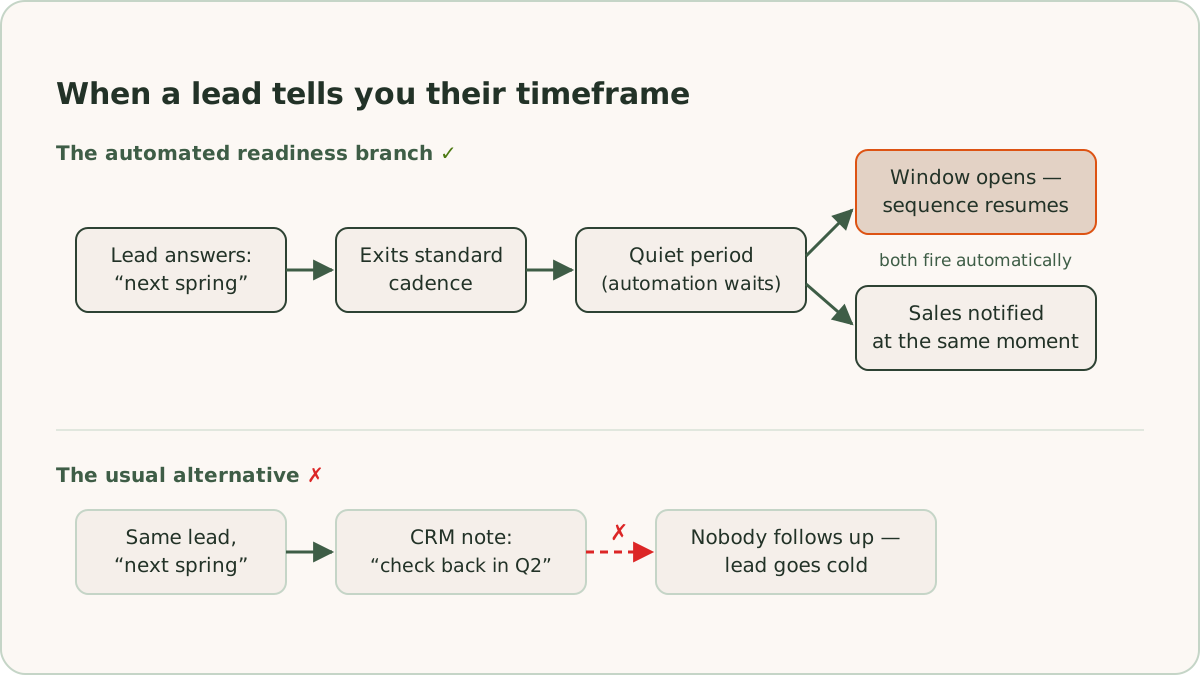
Most businesses handle that group badly. The lead gets one follow-up call, maybe two, then a note in the CRM that says "check back in Q2" that nobody ever acts on. The lead was qualified. The timing wasn't. Those are different problems, and they need different systems. We cover the distinction in detail in MQL vs SQL: a lead can match your ideal customer perfectly and still be months away from a buying decision. Sales should work the ready leads. A sequence should hold everyone else.
What a Lead Nurture Email Sequence Is (and What It Isn't)
A nurture sequence is an automated series of emails triggered by a specific event: a form fill, a content download, or a discovery call that ended with "not yet." Each email has one job. The sequence runs until an exit condition fires, and the exit conditions are defined before the first email is written.
That definition rules out two things that often get called nurture. A newsletter is not a nurture sequence, because it goes to everyone at the same time regardless of where each person is in a buying decision. A promo blast is not nurture either, because it asks for the sale without having earned it. Lead nurturing emails are timed to each lead's entry date and, done well, tailored to each lead's situation.
The prerequisite nobody enjoys is list hygiene. When we take over email for a client, the first project usually isn't writing emails. It's cleaning up the segments: merging duplicate tags that accumulated over years of manual imports, writing entry rules (for example, a contact enters nurture only if they're not a current client and they've inquired), and connecting the CRM to the email platform so a status change enrolls the lead automatically. If enrollment depends on someone remembering to upload a spreadsheet, the sequence will quietly stop running within a few months.
We also separate flows by entry point. A welcome flow for people who downloaded a guide from your website is a different sequence from a nurture flow for leads who had a sales conversation and weren't ready. Those two groups start from different levels of trust and knowledge, and one sequence can't serve both.
The Framework: Five Stages, One Job Per Email
Every email in the sequence has exactly one job. When an email tries to do three things, it does none of them, and the lead learns to skim. Here is the arc we build, stage by stage.
Stage 1: The Instant Response
The first email goes out within minutes of the form fill. Its only job is to confirm and deliver: confirm the request landed, deliver whatever was promised (the guide, the calculator, the confirmation that someone will be in touch), and say what happens next. No pitch. We've written separately about why response speed decides so many deals; the core of it is that a lead who hears back in minutes still has the problem open in front of them, while a lead who hears back tomorrow has moved on to the rest of their week.
Stage 2: Prove You've Solved This Problem Before (Days 1 to 7)
Interest peaks in the first week after conversion, so the sequence front-loads its strongest material there. The job of these emails is to show rather than claim: a case study in the lead's category, a problem-and-solution story about how a company like theirs fixed the exact thing they asked about. When we build these flows we segment the content by vertical, so a lead from one industry gets examples from that industry instead of a generic highlight reel. And because we also run the ads, we know which keyword and campaign produced each lead, which means the sequence can open with the problem they searched for.
Stage 3: Answer the Objections They Haven't Voiced
Most leads carry objections they never say out loud, and budget is usually the biggest. Each email takes on one objection. For budget, the email that works is specific: what an engagement looks like at three different spending levels, with real numbers wherever you can share them. A pricing-misconceptions email or a budget calculator does the same work. The goal is to answer the question the lead is silently using to disqualify you, before they would ever raise it on a call.
Stage 4: Show What Working With You Looks Like
By this point the lead believes you're competent. The remaining doubt is usually about process: how long it takes, what they'll have to do, what happens after they sign. This stage walks through it with a capabilities overview, a step-by-step of a typical engagement, or a deep-dive case study that follows one project from first call to result. The job is to let the lead rehearse the engagement in their head before anyone asks them to commit to it.
Stage 5: The Direct Ask
The last email in the arc is short, plain text, and reads like it was typed by a person rather than designed by a marketing team. No header image, no buttons, one link. Something like: "You grabbed our planning guide a few weeks back. Worth a 15-minute call to see if this fits what you're working on?" Its one job is a reply or a booked call. We build this email to look like manual outreach on purpose. Replies start conversations, and a conversation is what the entire sequence exists to produce.
Timing: Map the Sequence to Your Sales Cycle
A cadence we use often is six emails over 30 days, spaced at days 1, 3, 7, 11, 18, and 25. Notice the gaps widen as the sequence goes on. The first week gets three touches because that's when attention is highest. After that, the sequence slows to a pace that keeps you present without becoming noise.
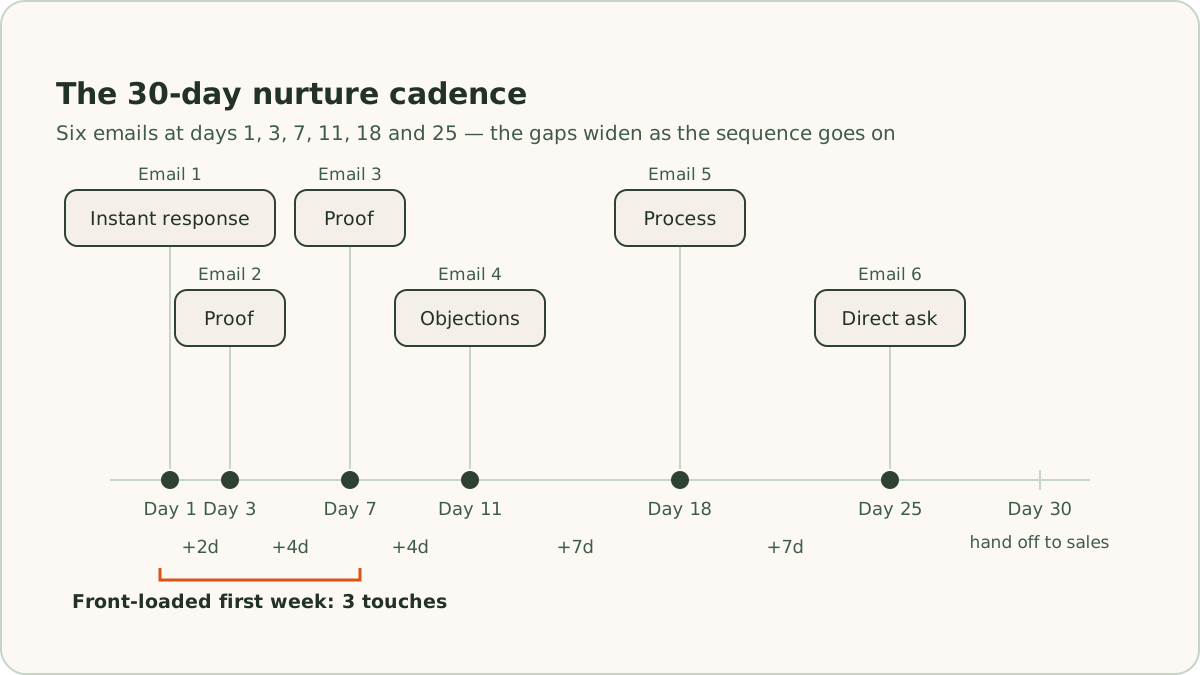
A 30-day arc fits a sales cycle of roughly one to three months. If your typical deal takes nine months, keep the front-loaded first week, stretch the education stages, and let the lead settle into a monthly touch after the direct ask. That longer arc is the norm in high-net-worth services, where a prospect can deliberate for a year before booking a first conversation. The active sequence should end around the point where a typical buyer in your market makes a decision, then hand off to sales or to a slower long-term track.
Readiness Branches: When a Lead Tells You Their Timeframe
The highest-leverage question you can add to a form or a discovery call script is "when are you looking to do this?" In our system we capture two structured fields wherever we can: a readiness timeframe (three months out, twelve months out) and the lead's biggest current challenge. Both sync from the CRM into the email platform as fields on the contact record, not as notes in a text box, and that's what makes them automatable.
The readiness field drives the branch most teams never build. A lead who says "we're planning for next spring" exits the standard cadence and enters a scheduled re-engagement: the sequence goes quiet, then automatically resumes as the stated window opens, and the sales team gets a notification at the same time. Nobody has to remember anything. The follow-up that would have been a forgotten CRM task becomes an appointment the system keeps on your behalf.
The challenge field branches content. A lead whose stated problem is awareness gets different Stage 2 and Stage 3 emails than a lead whose stated problem is retention. The skeleton stays the same; the proof changes.
Where SMS Fits Alongside Email
SMS belongs at specific moments, not as a parallel channel. We use it for the instant response (a short text confirming the request within a minute or two), for appointment logistics (reminders and reschedule links once a call is booked), and for the readiness re-open (a brief text when a lead's stated timeframe arrives). Education stays in email; nobody wants a case study by text. Keep total SMS volume to a handful of messages across the entire sequence, and only send it with consent captured at the form.
Exit Conditions: Booked, Replied, Scored to Sales, or Out
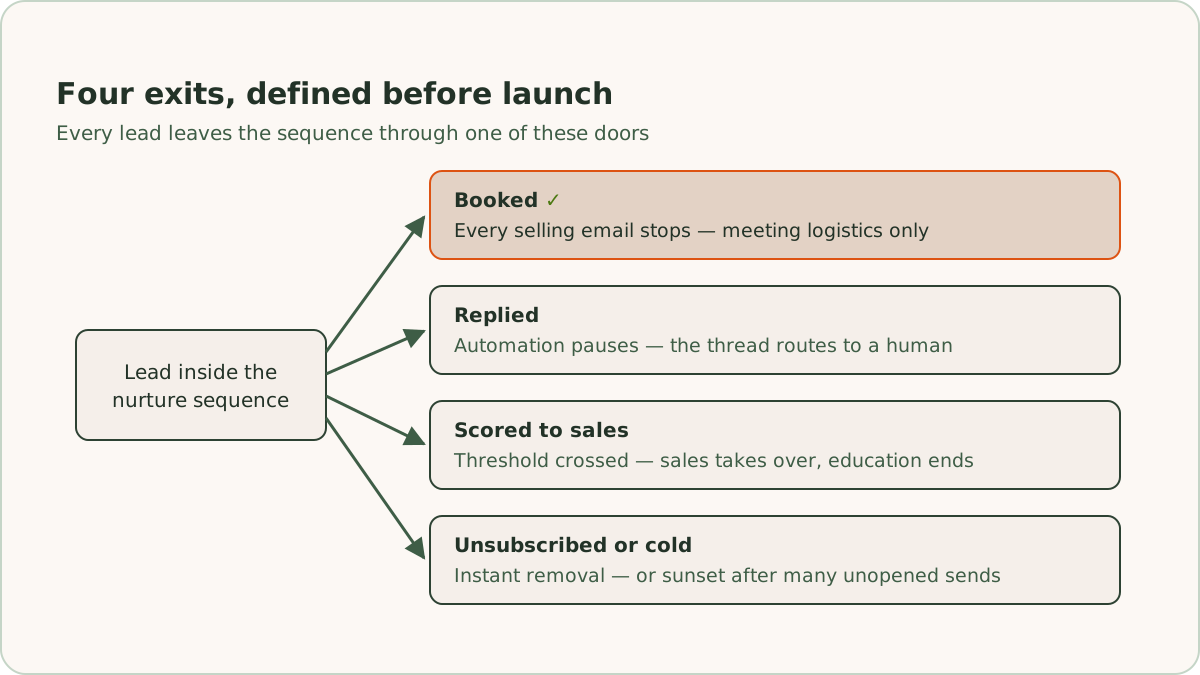
An automation without exit conditions will eventually embarrass you, usually by pitching someone who signed last week. We define four exits before any sequence goes live.
- Booked. The lead schedules a call, and every selling email stops immediately. The only automated messages after this point are logistics for the meeting.
- Replied. A human reply pauses the automation and routes the thread to a person. An automated email arriving after a genuine reply reads as exactly what it is, and it costs you the trust the sequence built.
- Scored to sales. Engagement raises the lead's score, and crossing a threshold triggers sales outreach and removes the lead from the education track. If you don't have scoring in place yet, lead scoring 101 covers how to set it up.
- Unsubscribed or cold. Honor unsubscribes instantly, and sunset leads who haven't opened or clicked across many consecutive sends. A list full of dead addresses drags deliverability down for everyone still reading.
There is one more transition worth designing: graduation. A welcome-flow subscriber who engages heavily shouldn't just reach the end of the sequence and fall off a cliff. We graduate those contacts into the nurture flow, or flag them for direct sales outreach, based on their engagement profile.
Why Nurture Works Best When It's Wired Into the Ads Funnel
We run email nurture as an add-on to Google Ads management, and the two systems share data in both directions.
Downstream, the sequences are source-aware. Because we manage the campaigns that generate the leads, every contact enters the flow tagged with the keyword, campaign, and landing page that produced it. We keep message consistency from keyword to ad to page in the paid funnel, and the sequence extends that same line into the inbox. A lead who searched for a specific service and converted on a page about that service gets lead nurturing emails about that service, not a generic company drip.
Upstream, results flow back to the ad account. We score leads progressively, from $1 at first inquiry up to full contract value, and upload those values to Google Ads as offline conversions across a 90-day window. When a nurtured lead books a call in week six and signs in week ten, that revenue is credited to the click that started it, and the bidding optimizes toward leads who eventually buy rather than leads who merely fill out forms. Without that loop, everything nurture wins is invisible to the platform spending your money.
Six Emails, Four Exits, One Connected System
A working lead nurture email sequence comes down to a fast first touch, a front-loaded first week, paced education with defined exits, and a branch for every lead who tells you their timeframe. We've built and run this system across 35+ lead generation businesses as part of one integrated funnel, from the ad click to the signed contract. If you'd rather have it built for you, that's what our email marketing for lead generation service does, alongside the Google Ads management that generates the leads in the first place.
Frequently Asked Questions
Quick answers to the questions readers ask most about this topic.
A nurture sequence is an automated series of emails triggered by a specific event: a form fill, a content download, or a discovery call that ended without a sale. Each email has one job, and the sequence runs until a defined exit condition fires. A newsletter does not qualify, because it goes to everyone at once regardless of where each person is in a buying decision, and a promo blast does not either, because it asks for the sale without having earned it.
A cadence we use often is six emails over 30 days, spaced at days 1, 3, 7, 11, 18, and 25. The first week gets three touches because attention is highest right after conversion, and the gaps widen from there. Map the arc to your sales cycle: the active sequence should end around the point where a typical buyer in your market makes a decision, then hand off to sales or a slower long-term track.
Define four exits before the sequence goes live. Booked: the lead schedules a call and every selling email stops immediately. Replied: a human reply pauses the automation and routes the thread to a person. Scored to sales: engagement pushes the lead past a threshold that triggers sales outreach. Unsubscribed or cold: honor unsubscribes instantly and sunset leads who stop opening, because dead addresses drag deliverability down for everyone still reading.
At specific moments, not as a parallel channel. We use it for the instant response, a short text confirming the request within a minute or two, for appointment logistics once a call is booked, and for a brief text when a lead's stated readiness timeframe arrives. Education stays in email, total SMS volume stays to a handful of messages across the whole sequence, and nothing sends without consent captured at the form.

Written by
Founder & CEO, ReClick.io
Corey runs Google Ads, landing page, and email nurture programs for lead generation businesses across the United States and Canada.
Keep Reading
Speed-to-Lead: Why Response Time Is the Cheapest Conversion Lever You're Ignoring
Speed to lead is the time between a form submission and your first response. Here is why the first minutes decide whether a paid lead becomes a conversation.
Lead Scoring 101: Build a Simple Scoring Model Without Expensive Software
Build a simple lead scoring model without expensive software: fit and behavior signals, dollar values, and thresholds your sales team will trust.
MQL vs SQL: Definitions, the Handoff, and How to Set the Line for Your Business
MQL vs SQL comes down to one question: is this lead ready for sales? How to define both stages, set the handoff line with sales, and enforce it.