
Dedicated Landing Pages vs Your Website: Why Sending Ads to Your Homepage Burns Budget
Published June 5, 2026
Landing page vs website: why sending paid clicks to your homepage raises CPL, and how dedicated landing pages recover the budget your ads are burning.
The landing page vs website question comes up in almost every audit we run. A business is spending real money on Google Ads, the campaigns are structured sensibly, and every ad in the account points to the homepage. Traffic arrives, wanders, and leaves. Cost per lead sits well above where it should be. The fix usually isn't in the campaign settings. It's in where the click lands.
Landing Page vs Website: Two Different Jobs
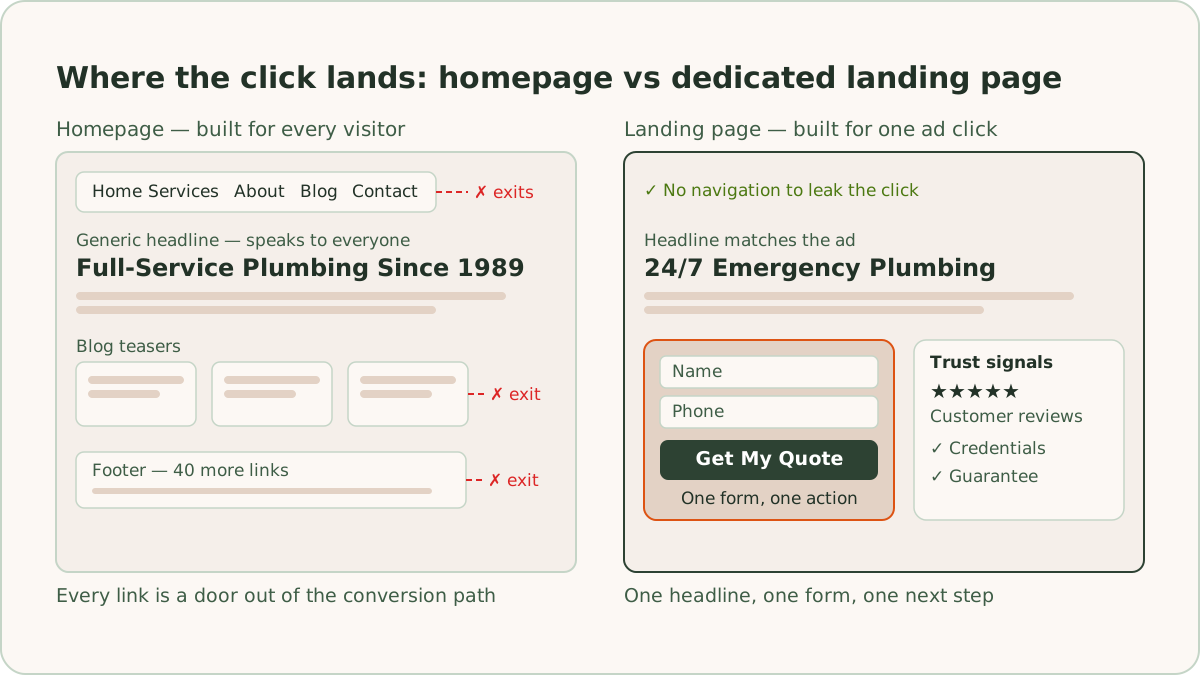
Your website was built to serve everyone. A first-time visitor who wants to know what you do. A returning customer looking for support. A job applicant hunting for the careers page. A prospect comparing you against three competitors. Google's organic crawler. Your homepage has to work for all of them at once, which is why it has a navigation bar, a footer with forty links, and copy general enough that no visitor feels excluded.
A paid click is none of those visitors. A paid click is one person who typed a specific search, saw an ad that promised something specific, and clicked because they want that thing now. They don't need an introduction to your company. They don't need six menu options. They need the page to confirm they're in the right place and show them the next step.
That distinction drives everything else in this article. A website serves every possible visitor. A dedicated landing page serves one ad click. When you send ads to your homepage, you're asking a general-purpose page to do a specialist's job.
What Sending Ads to Your Homepage Costs
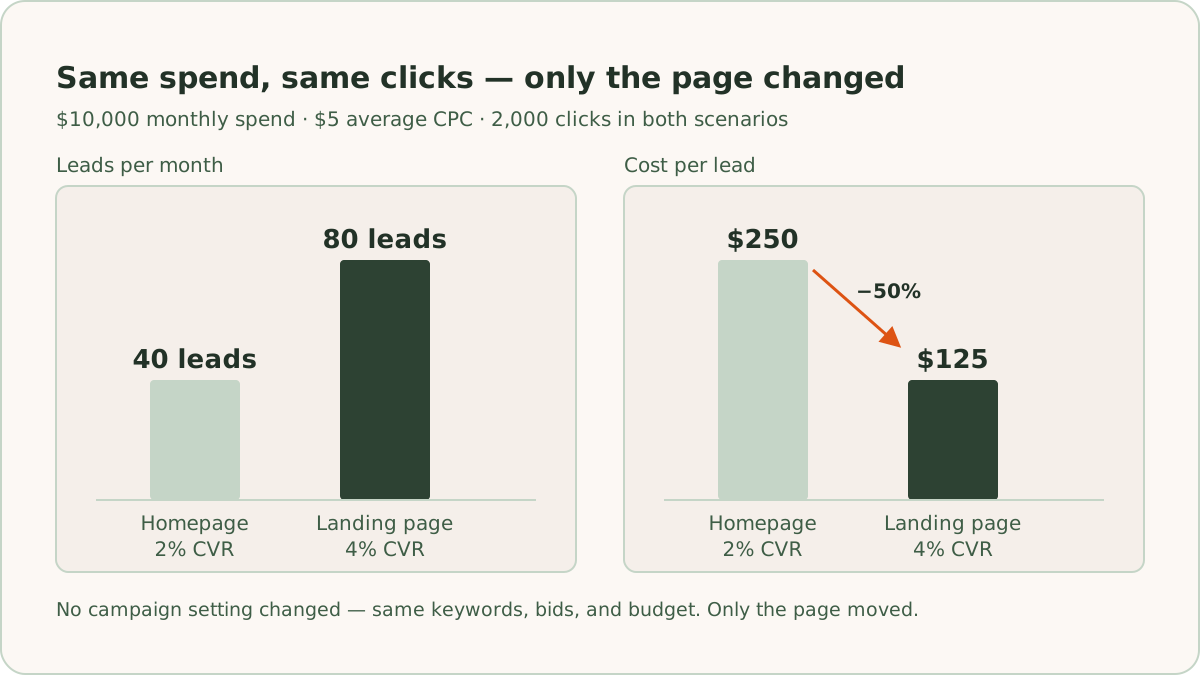
Run the numbers on a typical account. Say you spend $10,000 a month on Google Ads at an average cost per click of $5. That buys 2,000 clicks. If your homepage converts paid traffic at 2%, that's 40 leads at a cost per lead of $250.
Now route the same traffic to a dedicated landing page that converts at 4%. Same spend, same 2,000 clicks, 80 leads, $125 cost per lead. Nothing about the campaign changed. No new keywords, no bid adjustments, no extra budget. The only variable that moved is the conversion rate of the page, and it cut cost per lead in half.
A clean doubling is a convenient number for an example, and real results vary. But the mechanism holds at any magnitude: at constant spend, every point of conversion rate you recover comes straight off your cost per lead.
Where does the homepage leak that conversion rate? A few places, and they compound:
- Navigation exits. Every menu item, footer link, and blog teaser is a door out of the conversion path. Some percentage of paid visitors take one, browse, and never come back to the form.
- Diluted messaging. The homepage headline has to describe the whole company, so it can't lead with the one thing the visitor searched for.
- A buried ask. On most websites the form lives on a contact page, one or two clicks away. Every added click sheds visitors.
- Mobile friction. Long pages, heavy scripts, and forms designed on desktop punish the majority of paid traffic, which is usually on a phone.
When conversion rate drops on an account we manage, our diagnosis checklist starts at the landing page: mobile experience, form length, button placement, load speed, and whether the messaging matches the ad. A dedicated page removes most of these failure points by construction rather than by ongoing repair.
What a Dedicated Landing Page Does Differently
One page, one audience, one action
A dedicated landing page strips out everything that doesn't serve the click. No top navigation, because every menu item is an exit. One offer and one call to action, repeated down the page. The form sits above the fold or one scroll away, and it asks for the minimum you need to follow up. Trust signals (reviews, guarantees, credentials) sit next to the decision point instead of on a separate About page.
We hold the pages we build to a simple standard: a visitor who reads nothing but the headline and the button should still know what they get and what to do next. Everything below the fold exists to handle objections for the people who scroll.
Message match from ad to headline
The second thing a dedicated page buys you is message match from the ad to the page. Someone searches "emergency plumber," your ad headline says "24/7 Emergency Plumbing," and the page they land on should lead with emergency plumbing. Not "Full-Service Plumbing Since 1989." A homepage headline can't do this, because it has to cover every service for every visitor. A dedicated page can, because it only answers to one ad group.
This gap shows up in audits constantly, and it's often subtler than a wrong headline. On one of our accounts, the landing page's H1 carried the main keyword, but the body copy never echoed the variants people were typing. The exact phrasing behind most of the ad group's spend appeared in the title tag and nowhere a visitor would read. Visitors feel that mismatch even if they never articulate it, and Google's Landing Page Experience rating measures it.
The Quality Score Chain: Page Experience, CPC, and CPL
The landing page doesn't only affect what happens after the click. It affects what you pay for the click.
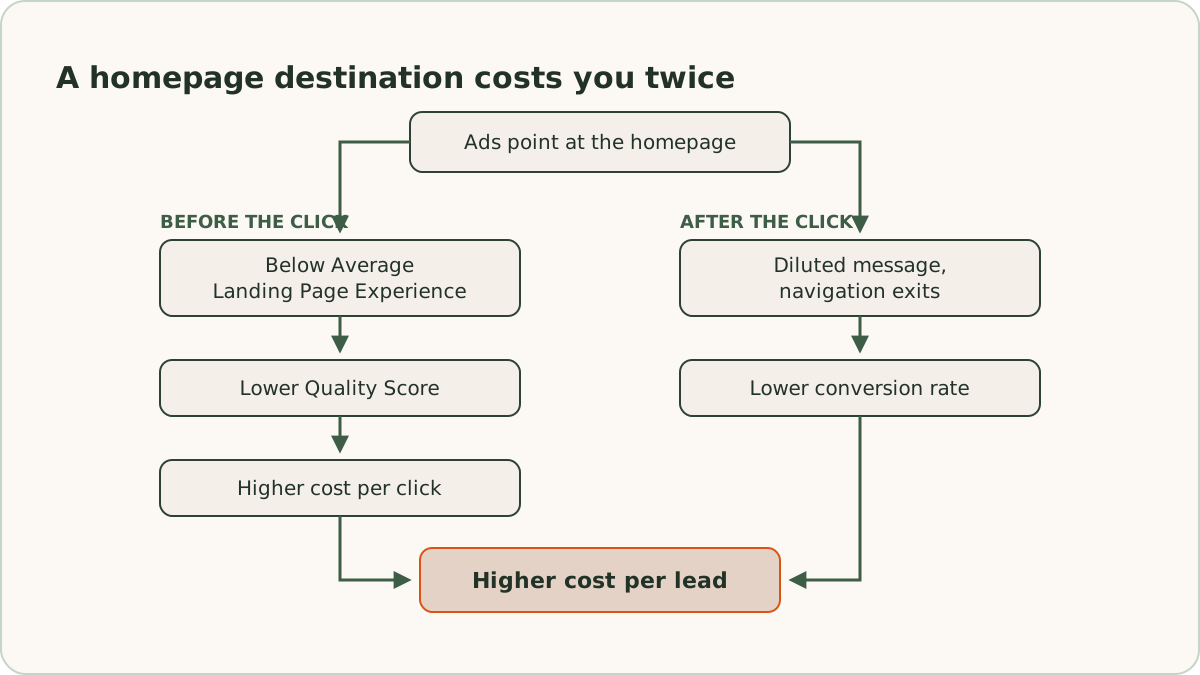
Google grades every keyword's Quality Score across three components: Expected CTR, Ad Relevance, and Landing Page Experience, each rated Below Average, Average, or Above Average. Landing Page Experience measures how relevant and useful your page is to the person who clicked. Google crawls the page and checks whether the copy reflects the user's search terms, whether it loads quickly, whether it works on mobile, and whether it's secure. Quality Score feeds into Ad Rank, and a higher score lowers what you pay per click at the same bid.
A homepage rarely rates well here on non-brand keywords, for the same structural reason it converts poorly: its copy can't reflect every search term in the account.
We audit this by mapping each keyword to the final URL it serves and segmenting the Quality Score ratings by URL. On one of our accounts, that audit surfaced a cluster of high-spend keywords rated Below Average on Landing Page Experience, all pointing at a page that never used the phrase variants driving the spend, and cost per lead on those keywords ran well above the keywords rated Average. The extra cost showed up in the auction, but the cause was on the page.
So sending ads to your homepage costs you twice: once in conversion rate after the click, and again in cost per click before it.
When Your Website Is Fine
Not every campaign needs a dedicated landing page, and building pages nobody needed is its own kind of waste.
- Brand campaigns. Someone searching your company name usually wants your website. The homepage is the right destination for navigational intent.
- Service pages that already behave like landing pages. If a page covers a single service with a focused headline, an on-page form, and little distraction, it may perform fine. Test it against a dedicated build before assuming it's the problem.
- Low-spend ad groups. If an ad group spends $200 a month, a custom page build is rarely the best use of anyone's hours. Fix the bigger leaks first.
- Single-offer businesses. If you sell one thing to one audience, your homepage may already be a landing page in everything but name.
Judge the destination by its structure and its message match, not by whether it technically sits on your website.
How Many Landing Pages You Need, and Which to Build First
Not one per keyword. In practice, one page per intent theme, which usually means one per ad group, with the headline and body copy echoing that ad group's keywords.
Our rollout order is consistent across accounts: dedicated pages for the top-spending ad groups first. The reason is arithmetic, not preference. If one ad group spends $6,000 of a $10,000 monthly budget, a conversion rate lift there moves the whole account's cost per lead. The same lift on an ad group spending $300 a month is a rounding error. We rank ad groups by spend, build for the top of the list, and work down as each page proves itself.
From there, segmentation is worth adding only where the data supports it. Splitting pages by intent (research searches versus purchase-intent searches) or by traffic source (brand versus non-brand) can help, but each split multiplies the pages you have to maintain and test. A location split earns its keep sooner for multi-location businesses such as labs and testing services, where a page naming the nearby facility closes a trust gap a generic homepage leaves open. Start with spend, split later.
How We Test a New Page Before Trusting It
A new landing page is an experiment, and we run it like one.
A written causal hypothesis before launch. Not "testing a new landing page" but the mechanism spelled out: tighter keyword-to-page alignment should lift Landing Page Experience from Below Average to Average on the affected keywords, which should lower CPC at the same bid, with the expected size of the drop written down before launch. A hypothesis written at that level of detail can be proven wrong, which is exactly what makes it useful.
A/B against the existing page, not a full swap. We split traffic between the new page and the current one so the comparison runs in the same weeks, against the same auction conditions.
Minimum data before conclusions. We set a spend threshold in advance and don't call the test before reaching it. Results get read with significance testing. When a difference isn't significant, we label it directional and keep collecting rather than dressing it up as a verdict.
Patience with Quality Score. Quality Score components take time to update after material page changes. Early CPC reads won't yet reflect the mechanism being tested, so we schedule the first Quality Score read accordingly instead of reacting to day-three numbers.
Revert criteria defined before launch. If conversion rate on the new page drops more than a set amount against control, traffic goes back to the original while we investigate. Deciding that threshold before launch keeps the decision honest.
That discipline matters most when the data is messy. On one of our tests, cost per lead read worse on the new page mid-experiment, and the tempting call was to revert. But the window was confounded: account spend had scaled up sharply into broader traffic during the test, and downstream conversions imported with a lag that dragged the recent numbers down. We labeled the result inconclusive, kept the page live because click-through rate held, and scheduled a re-read on an earlier-funnel metric over a stable-spend window. Calling a winner or a loser from a confounded window is worse than waiting.
Your Top Ad Group Deserves Its Own Page
If your ads point at your homepage today, pull two numbers: your top ad group by spend and its conversion rate. That ad group is where a dedicated page pays back fastest, and it's where we start on every account we take over. We build and run dedicated landing pages for lead generation as part of Google Ads management, with the message match, Quality Score auditing, and testing discipline described here, refined across 35+ lead generation businesses.
Frequently Asked Questions
Quick answers to the questions readers ask most about this topic.
For paid traffic, generally yes, because the two are built for different jobs. A website serves every possible visitor, so it carries navigation exits, diluted messaging, and a form buried on a contact page. A dedicated landing page serves one ad click: one offer, one call to action, and a headline that leads with the thing the visitor searched for. At constant spend, every point of conversion rate the page recovers comes straight off your cost per lead.
They address the Landing Page Experience component directly. Google checks whether the page copy reflects the search terms a keyword serves, and a homepage rarely rates well on non-brand keywords because its copy cannot reflect every search term in the account. A dedicated page written against one ad group's keywords can, and a higher Quality Score lowers what you pay per click at the same bid.
Not one per keyword. One page per intent theme, which usually means one per ad group, with the headline and body copy echoing that ad group's keywords. Build for the top-spending ad groups first, because a conversion rate lift on the ad group carrying most of the budget moves the whole account's cost per lead, then work down the spend ranking as each page proves itself.
Brand campaigns, since someone searching your company name usually wants your website. Service pages that already behave like landing pages, with a focused headline, an on-page form, and little distraction. Low-spend ad groups, where a custom page build is rarely the best use of anyone's hours. And single-offer businesses, whose homepage may already be a landing page in everything but name. Judge the destination by its structure and message match, not by where it sits.

Written by
Founder & CEO, ReClick.io
Corey runs Google Ads, landing page, and email nurture programs for lead generation businesses across the United States and Canada.