
Ad-to-Page Message Match: The Conversion Lever Hiding in Your Headlines
Published July 13, 2026
Message match keeps your keyword, ad, and landing page telling one story. Here's how we structure ad groups and pages so the promise carries through.
Message match is the discipline of keeping one promise intact from the search query to the ad to the landing page. Someone searches for a specific thing, your ad offers that thing, and the page they land on confirms it in the first headline they read. When the chain holds, the visitor never has to wonder whether they clicked the right result. When it breaks, they leave, and you pay for the click either way. Across the 35+ lead generation businesses we've worked with, a broken ad to landing page message match is one of the most common problems we find in an audit, and usually the cheapest one to fix.
What Message Match Is (and Where It Breaks)
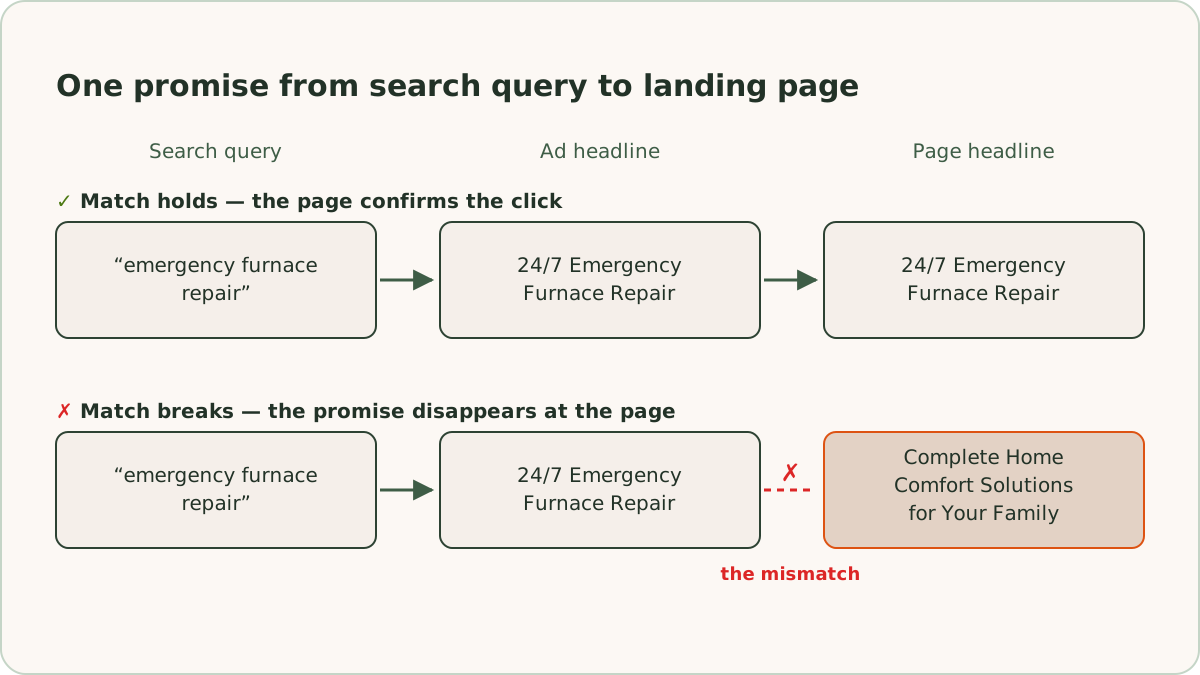
Picture the chain in a real account. A homeowner searches "emergency furnace repair." Your ad headline reads "24/7 Emergency Furnace Repair." They click, and the page that loads says "Complete Home Comfort Solutions for Your Family."
Nothing on that page is wrong. It describes the same company and the same services. But the promise the visitor clicked on has disappeared. They searched for an emergency, the ad acknowledged the emergency, and the page led with a brand statement. The gap between what the ad said and what the page says is the mismatch, and it opens in the first second of the visit.
Message match runs through three links: the keyword to the ad, the ad to the page headline, and the headline to everything below it (the offer, the proof, and the call to action). Most accounts get the first link roughly right, because Google's ad strength feedback pushes advertisers to put keywords in headlines. The second and third links are where things fall apart, usually because the ads and the pages are owned by different people, built at different times, and never checked against each other.
Why a Mismatch Kills Conversions Before the Fold
A visitor arriving from a search ad gave your ad a glance, not a careful read, before clicking. They arrive with a single question: is this the thing I clicked on? The page headline answers it. If the answer is yes, they keep reading. If the headline talks about something adjacent, some visitors will scroll and figure it out, and the rest hit the back button and click the next result.
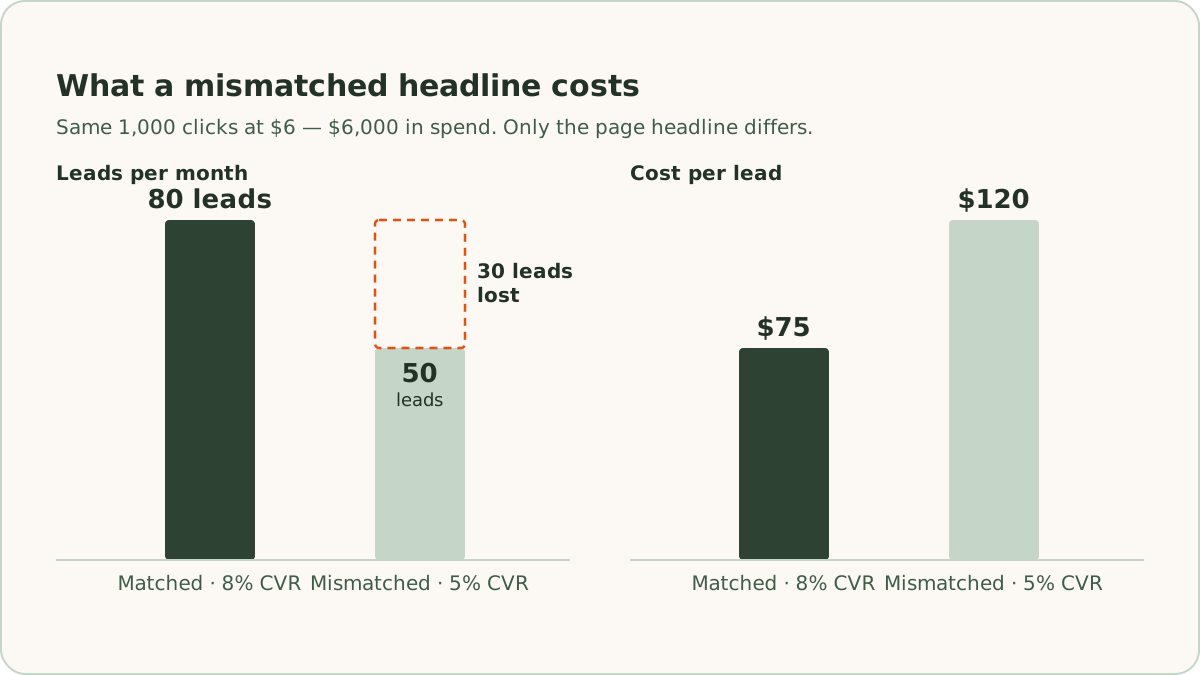
That back click costs real money. Here's the math on a modest example. Say a campaign gets 1,000 clicks a month at $6 a click, $6,000 in spend. At an 8% conversion rate you get 80 leads at a $75 cost per lead. If a mismatched headline drops that to 5%, the same $6,000 buys 50 leads at $120 each. Nothing about your targeting, bids, or ad copy changed. The page failed to confirm the promise, and 30 leads a month went to whoever ranked below you.
Message Match Starts With Ad Group Structure
You can't fix message match at the ad or page level if the ad group underneath is broken. An ad's headlines serve every keyword in its ad group. If those keywords carry different intents, the ad has to hedge, and a hedged ad can't match anything specifically.
This is why we keep ad groups intent-tight. The test we use for whether a keyword set deserves its own ad group: would someone searching this term expect different messaging than the general audience? Someone searching "air purifier for pets" expects to hear about dander and odors. Someone searching "air purifier" might care about allergies, smoke, or general air quality. Those searches deserve separate ad groups with separate headlines, because no single ad speaks to both well.
The test cuts the other way too. "Buy air purifier," "air purifier for home," and "best air purifier" are variations of the same purchase intent, and they can share an ad. If you can't articulate what would be different about the headlines, there's no reason to split. Every split fragments your data, and an ad group getting a handful of clicks a month never accumulates enough signal to optimize. We also don't split ad groups by match type. Separate groups for exact and phrase match of the same keywords add complexity without adding relevance.
One mechanical detail matters when you do split: add the specific terms as negatives to the general ad group. If "air purifier for pets" gets its own ad group but the general group can still match pet queries, traffic routes unpredictably and your carefully matched ad only serves some of the time.
Get the structure right and the remaining work is writing. Each ad group represents one intent, so one ad can speak to it directly, and one landing page can receive it.
The Three Layers of Ad to Landing Page Message Match
Keyword to Ad Headline
The ad should mirror the language of the search, not the language of your org chart. If people search "furnace repair," the headline says furnace repair, not "HVAC solutions." Beyond mirroring the query, our ad copy leans on benefits, features, and proof (reviews, testimonials, concrete outcomes) rather than manufactured urgency or discounts. That choice matters for match later. Whatever the ad claims, the page has to substantiate, and proof is easier to substantiate than a countdown timer.
Ad Headline to Page Headline
This is the link most accounts miss, and the highest-leverage fix. The page headline should restate the promise of the ad, close to verbatim for your top ad groups. If the winning ad headline is "24/7 Emergency Furnace Repair," the page headline is a close variant of exactly that, not a rewrite by a designer who never saw the ad. The subheadline can widen the story. The headline's job is to confirm the click.
Offer, Proof, and CTA
Match doesn't stop at the headline. If the ad promises a free consultation, the page's button says "Book Your Free Consultation," not "Request a Quote." Those read as different commitments, and visitors notice the swap. If the ad cites a specific number (years in business, review count, a rating), the page shows the same number. If the ad's proof is testimonials, the testimonials sit near the top of the page, not in a footer carousel. Every element the visitor saw in the ad should be findable on the page without scrolling past unrelated content.
How a Mismatch Shows Up in Your Account
You don't have to guess whether you have a message match problem. It leaves two signatures in the data.
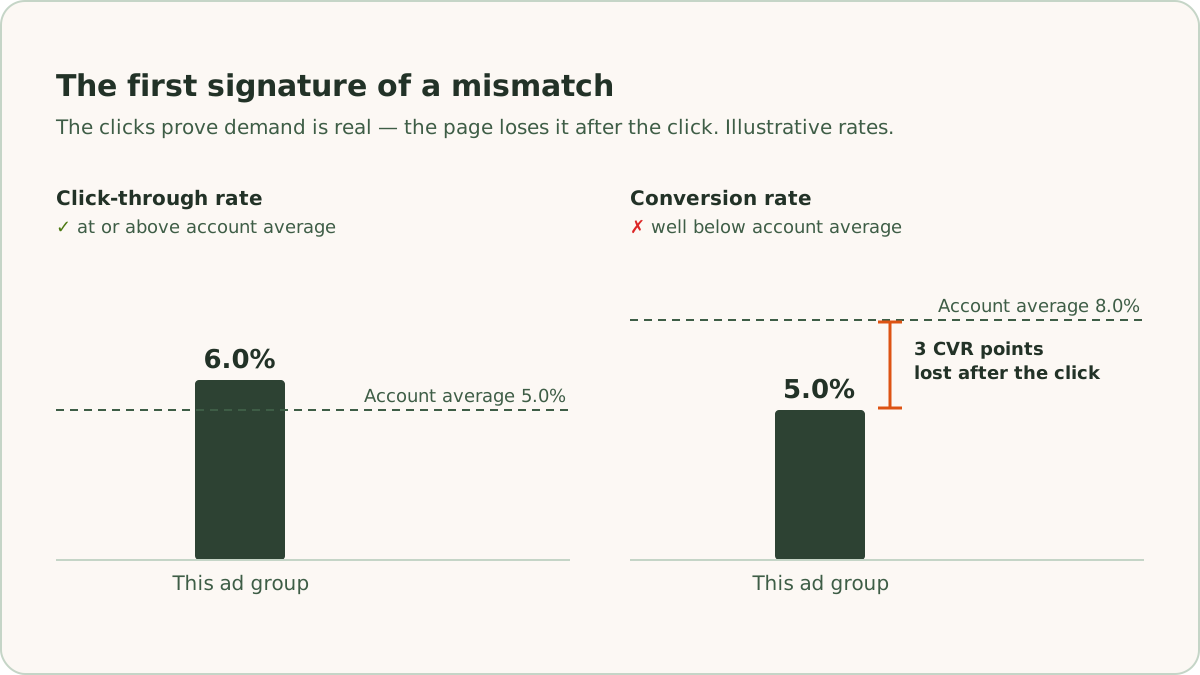
The first is a healthy CTR paired with a poor conversion rate. The ad matches the query well, people click at a normal or better rate, and then the page fails to convert them. When we see an ad group where CTR sits at or above the account average while conversion rate sits well below it, the ad to page transition is the first thing we check. The clicks prove the demand is real. Something after the click is losing it.
The second signature is in Quality Score. Google grades every keyword on three components (Expected CTR, Ad Relevance, and Landing Page Experience), each rated Below Average, Average, or Above Average. Landing Page Experience is scored partly by crawling your page and assessing whether its copy reflects the user's search terms. A mismatched page tends to earn a Below Average rating there, which drags the keyword's Quality Score and raises what you pay per click. We audit this by mapping every keyword to the final URL it serves, then looking for keywords whose page copy never mentions what they're about. The mechanics of how those ratings change your CPC are covered in how Quality Score lowers cost per lead.
The two signatures compound. A mismatched page costs you conversions, and the Landing Page Experience rating means you also pay more for each click that reaches it.
Auditing Your Own Ad-to-Page Match
The audit is tedious but not complicated, and you can run it in an afternoon.
First, export your keywords with their final URLs and their spend, then sort by spend. The top ten ad groups usually account for most of the budget, and they're where match problems cost the most.
Second, for each of those ad groups, put three things side by side: the top search terms triggering the ads, the headlines of the current ads, and the headline of the landing page those ads point to. Read them in sequence, the way a visitor experiences them. Grade the chain honestly: does the ad restate the search, and does the page restate the ad?
Third, check what the ad promises beyond the headline. Offer, numbers, proof, CTA. Note each element the ad mentions that the page doesn't deliver above the fold.
When you find a mismatch, there are three fixes, in ascending order of effort. If the ad group is intent-tight and the page is close, rewrite the page headline and CTA to mirror the winning ad. If the ad group mixes intents, split it first, because fixing the page is pointless while the ad still has to hedge. And if the ads point at a general website page (a homepage or a services index), the fix is usually a dedicated landing page built for that one intent. We build dedicated pages for the top-spending ad groups first, because that's where a percentage point of conversion rate is worth the most. The tradeoffs between sending traffic to your site and building purpose-built pages are laid out in dedicated landing pages vs. your website.
Testing Headline Matches Without Calling Winners Early
A page headline change is an experiment, and we treat it like one. Every experiment we launch gets a written causal hypothesis first. Not "testing a new landing page headline," but "changing the page headline to mirror the top ad's promise, because we expect fewer immediate exits and a higher conversion rate at the same CTR." Writing that sentence forces you to name the metric you expect to move and the reason it should move, which is what makes the result readable later.
Then we let the test run. Conversion rate differences on lead generation pages are usually modest, and modest differences take real volume to confirm. A page converting at 9% against a control at 8% after 150 visitors each is not a winner yet. It's noise until you have enough volume to rule out chance. We run every test through significance testing and hold until the result is stable, and when we act on an early read anyway, we label it directional in our notes so nobody later mistakes it for a proven result. You can check your own tests in a minute with our statistical significance calculator before you declare anything.
One more habit worth stealing: we don't launch page tests during a client's peak weeks. A change embargo during the season that matters protects the account from an unlucky test at the worst time, and protects the test from abnormal traffic that won't generalize.
Keeping One Promise From Query to Form
Message match is a chain: intent-tight ad groups make a specific ad possible, the ad mirrors the search, and the page confirms the ad in its headline, offer, proof, and CTA. Audit your top-spending ad groups first, fix structure before copy, and test headline changes with a written hypothesis and enough patience to read the results honestly. All of this is easier when one team owns both sides of the click, which is how we run it: our landing page service for lead generation builds and tests pages as part of the same system that manages the ads, so the promise never changes hands between the click and the form.
Frequently Asked Questions
Quick answers to the questions readers ask most about this topic.
Message match is the discipline of keeping one promise intact from the search query to the ad to the landing page. It runs through three links: the keyword to the ad, the ad to the page headline, and the headline to the offer, proof, and call to action below it. When the chain holds, the visitor never has to wonder whether they clicked the right result.
It leaves two signatures in your account data. The first is a healthy CTR paired with a poor conversion rate: the ad matches the query and earns clicks at a normal or better rate, then the page fails to convert them. The second is Below Average ratings on Landing Page Experience, which Google scores partly by crawling your page and checking whether its copy reflects the search terms.
Yes, close to verbatim for your top ad groups. The visitor arrives with a single question, whether this is the thing they clicked on, and the page headline answers it. The subheadline can widen the story; the headline's job is to confirm the click. The match should carry through the offer, the proof, and the button copy, so a free consultation in the ad is a free consultation on the page.
Yes. A mismatched page tends to earn a Below Average rating on Landing Page Experience, which drags the keyword's Quality Score and raises your cost per click. The two costs compound: the mismatch loses conversions after the click, and the rating makes each click that reaches the page more expensive.

Written by
Founder & CEO, ReClick.io
Corey runs Google Ads, landing page, and email nurture programs for lead generation businesses across the United States and Canada.