

How Promobile Marketing Scaled Its Experiential Marketing Agency by $11.2M in Revenue from Google Ads
How we helped an experiential marketing agency go from zero paid acquisition to $11.2M in attributed revenue and 1,250+ pipeline leads on Google Ads.
Overview
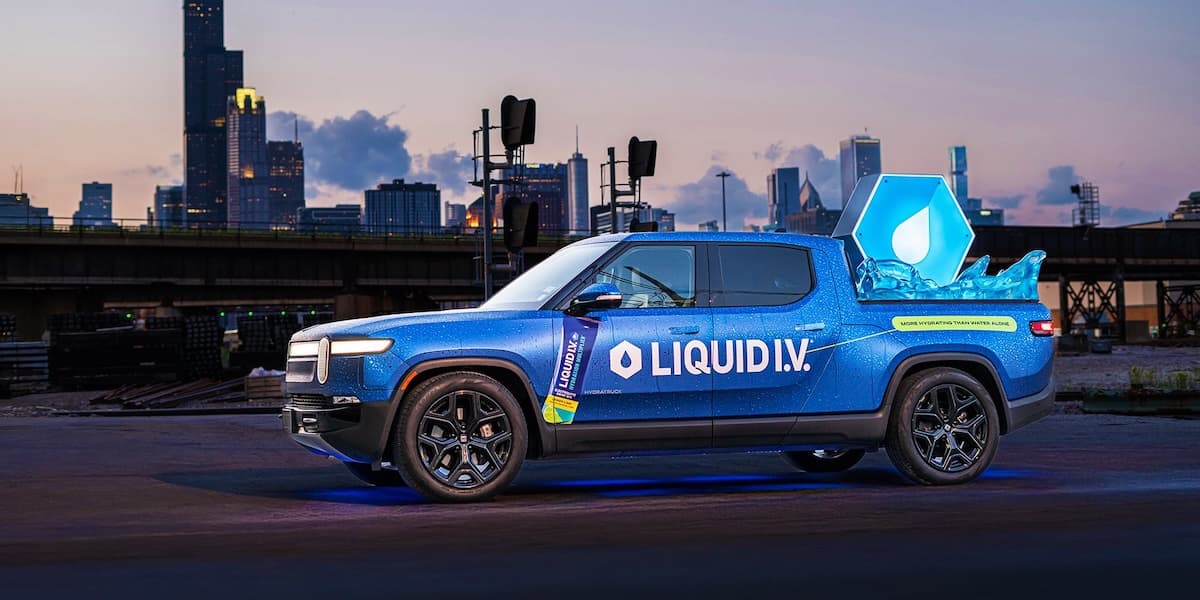
Promobile Marketing is an established experiential marketing agency. They build on-the-ground brand activations for consumer brands, the kind of activation you see at a festival, a pop-up, or a sampling tour. When we started working together in March 2023, they had no working paid acquisition channel. Prior agencies had spent budget without producing pipeline, and the business ran almost entirely on referrals and the founder's network.
Three years later, Google Ads is one of Promobile's most predictable sources of new business. We've driven over 1,250 leads into the pipeline and over $11.2M in attributed revenue from the channel, counting both new business and repeat business from leads that originally came through Google Ads, on an average monthly budget of around $9,500. Budgets have since grown past $15K a month as the channel proved out.
The reason this worked is that we didn't treat Promobile's account like an ecommerce account. B2B experiential marketing has a long sales cycle, a small number of high-value deals, and a wide gap between "filled in a form" and "will eventually sign a contract." Optimizing Google Ads for form fills alone would have taught the platform the wrong lesson. The core decision we made early, and kept doubling down on, was to feed qualification signals from Promobile's CRM back into Google Ads so that bidding optimized for high-intent buyers, not inbox volume.
The Challenge
We inherited an account that had been running off and on for a couple of years without producing a consistent return. The situation looked like this:
- No digital proof reaching the right buyers. Promobile had real expertise in their space, but previous agencies had optimized the account against the loudest signal available, form submissions, and ended up buying a lot of wrong-fit inquiries.
- Long sales cycle. A meaningful experiential activation takes 60 to 90 days from first conversation (even up to 12 months) to signed contract, which meant any optimization loop shorter than 90 days was effectively running blind.
- High-ticket, low-volume business model. A handful of contracts make a quarter. Ten bad leads are worse than two good ones, because bad leads also waste sales time.
- Inconsistent pipeline. Revenue moved in step with the founder's network rather than on a predictable cadence. The ask was specific: can paid acquisition become a channel we can plan a quarter around, or is this just not a channel that works for our business?
Our Approach
The single decision that changed the trajectory of this account was the decision about what signal to send Google Ads, and when.
Most B2B Google Ads accounts send one of two signals back to the platform. Either they optimize against raw form fills, which teaches Google to optimize for anyone willing to type an email into a box. Or they try to optimize against closed contract value, which sounds smarter but runs into a hard constraint: Google Ads caps the offline conversion window at 90 days from the original click. In a business like Promobile's, most contracts close well outside that window. By the time the revenue is real, the signal can no longer be attached to the click that started it, and the bidding algorithm never learns from the data.
The fix we settled on was to use lead scoring as the signal, not closed revenue. Whenever a lead comes through Google Ads, we capture the Google click ID (GCLID) at form submission. Sales reviews the lead against Promobile's qualification criteria, and as soon as it's marked qualified in the CRM, that qualification event is uploaded back to Google Ads against the original gclid. The qualification decision almost always happens inside the 90-day window, even when the deal itself takes six months or more to close.
The practical effect is that Google's bidding algorithm learns what a qualified lead looks like, not just what a form-filler looks like. The people who eventually become $50K-$250k contracts search differently from the people who fill out forms and disappear, and Google can see that difference once it has clean in-window qualification data to learn from. Promobile's CRM still tracks the full downstream revenue story, and we use that offline to decide how aggressively to fund the channel. The two layers do different jobs.
This pattern matters for any service business where the sales cycle runs past 90 days. Waiting for closed revenue to optimize the account is a losing game. The qualification event is the right signal.
Alongside the feedback loop, we rebuilt the account around three principles:
- Structure by intent, not by convenience. Brand defense, high-commercial-intent search, and exploratory campaigns each got their own budget and their own objective. We do not let a single campaign's budget decide the fate of three different intent levels.
- Exclude what we've learned doesn't convert. Over time, certain categories of searchers consistently produce inquiries that never close. We keep those negative lists current and prune them on a weekly cadence. This is continuous maintenance, not a one-time setup.
- Geography matters for B2B services. Lead quality varies materially by metro. We monitor that and reallocate budget toward regions where closed-won rates are higher. The geography layer doesn't change often, but when it does, it changes a lot.
One documented experiment shows how this account operates. In one campaign, we swapped the homepage destination for a dedicated service landing page and cost per form fill improved by roughly 40%. We then made the identical swap in a second campaign, performance got measurably worse, and we reverted it. Same change, opposite outcomes, because the variable that matters is how well the page fits the intent behind the search, not a rule like "service pages beat homepages." That pair of results is why every meaningful change in this account runs as a documented experiment against a pre and post baseline, rather than a rollout justified by a best practice.
The 3-Year Arc
Year one was learning. We spent $58K through 2023 and produced 160 initial conversions. The CRM feedback pipeline was being built and tested, so qualification signals hadn't started flowing yet. The goal of year one was to prove the channel could produce lead volume at a sensible cost before asking it to optimize for anything more sophisticated.
Year two was where the loop started closing. By 2024, qualification events were flowing reliably from the CRM back into the account against the original click IDs. We spent $118K across the year, produced 381 conversions across the funnel, and the bidding algorithm started to shift its target from form-fillers toward the profile that gets qualified by sales. CPL held at around $310.
Year three was compounding. In 2025 we spent $126K, produced 533 conversions, and Promobile's CRM was reporting revenue outcomes that made the math on the channel a non-issue. CPL dropped to around $262 as the bidding algorithm refined which profiles to bid on.
Year four (2026, in progress) is running at the largest scale of the engagement. After a deliberate landing page testing window in the spring, the account came back onto a clean trajectory with better pages and broader intent coverage. Performance Max has been added alongside the core search campaigns and is still in early learning, so the proven search program continues to carry the results while the newer campaign type accumulates data. The qualification loop is mature enough that the work has shifted from proving the channel to raising its ceiling.
Across the full three-plus years, $11.2M in attributed revenue on roughly $350K in ad spend is the headline. The number we pay more attention to internally is that lead volume has more than tripled while CPL moved in the right direction, which is the operational definition of "this channel is working."
Key Wins & Strategic Insights
- B2B lead gen needs its own optimization loop. Ecommerce playbooks don't transfer. Optimizing for form submissions when the economics live at contract signing produces the wrong answer every time. The fix is technical (offline conversion tracking, lead scoring uploaded by gclid), but the real shift is philosophical: you're teaching the algorithm what a qualified buyer looks like, not what a form submitter looks like.
- If your sales cycle is longer than 90 days, stop trying to upload revenue. Upload qualification events instead. Google Ads' offline conversion window caps at 90 days from click. For any B2B business with a longer cycle, waiting for closed revenue to optimize the account is structurally a losing game: by the time the revenue is real, the window has closed and the signal can no longer be matched to the click. Lead scoring lives inside the window, so that's what we send.
- Exclusions are where a lot of the ROI hides. A qualified-lead strategy is 50% what you bid on and 50% what you refuse to bid on. The ongoing work of pruning unqualified search categories is routine maintenance, but it's where a meaningful share of the efficiency gain came from.
- Geography is an optimization surface. B2B service buyers are not uniformly distributed across metros. Noticing that and reallocating toward higher close-rate regions produced quiet, consistent lift every quarter.
What We Learned
For B2B businesses with long sales cycles, the highest-leverage change is teaching Google Ads what a qualified buyer looks like, not what a form submitter looks like. Uploading CRM qualification events against the original click ID, inside Google's 90-day window, is what turned Promobile's channel from noise into a predictable pipeline that compounded across three years.
What Happens After the Lead
Everything above describes how we buy the right clicks. Just as much of the return comes from what happens once a lead is in the pipeline, because in a long-cycle business most good leads are not ready to buy the week they inquire. The framework is the one we lay out in our guide to the lead nurture email sequence.
Working with Promobile's team, we connected the client's CRM to their email platform so that pipeline status drives email automatically. When sales updates a lead's status in the CRM, that change enrolls the lead in the right email sequence on its own; nobody has to remember to add anyone to a list. A few design decisions carry most of the weight:
- Readiness timeframes are captured and acted on. Every lead states a rough buying window at intake, whether that's three months out or a year out. When a lead's stated window opens, automated follow-up restarts the conversation at the moment it becomes relevant, instead of leaving the timing to a salesperson's memory.
- Nurture branches by vertical. A lead receives content matched to their industry, with activation examples and proof from their own category rather than a generic drip.
- Automation yields to humans. If a nurtured lead re-engages, the sequence pauses and sales owns the conversation. It resumes only if the thread goes quiet again.
We also widened the qualification signal feeding Google Ads. Rather than a single yes/no qualified event, leads are staged: an early pre-qualified status sends one conversion value back to the account and routes the lead into nurture, and full qualification sends a higher value. The bidding algorithm sees escalating values from first inquiry toward signed contract, which gives it a far finer-grained picture of what a valuable click looks like. This is the progressive approach from our guide to lead scoring.
This nurture layer is the same system we build for clients as an add-on to Google Ads management. See email marketing for lead generation for how it works.
Where The Account Goes Next
The client has raised its 2026 target to $10M in new revenue from Google Ads, and the roadmap is built to support it. The biggest program in flight is a dedicated landing page build-out that came out of a full Quality Score audit of the account: purpose-built pages matched to each intent theme, replacing general-purpose pages that were doing too many jobs at once. Alongside it, we're expanding coverage into adjacent high-intent segments that competitive analysis surfaced, and continuing to close the attribution gap, since more complete revenue feedback from the CRM sharpens bidding even further.
Every new campaign type we add gets onboarded through the same offline conversion loop before it's trusted with meaningful budget.
Ready to build a real Google Ads channel for your service business?
We help B2B service businesses turn Google Ads from a form-fill machine into a predictable pipeline of qualified, high-value leads. Every account gets the same offline conversion loop Promobile runs on, documented experiments, and weekly pre-post baselines so you always know whether the channel is working.
Frequently Asked Questions
Common questions about B2B Google Ads, long sales cycles, and offline conversion tracking.
Yes, but not the way most agencies run it. The challenge with B2B experiential marketing is that "form fill" and "qualified buyer" are very different things. If you optimize the account for form volume, you end up paying for a lot of inquiries that never close. The fix is feeding qualification signals from your CRM back into Google Ads so the bidding algorithm optimizes for buyers, not inboxes. That's what we did with Promobile, and it's why the channel compounded over three years.
This is the most common question we get from B2B service businesses, and it's a critical one. Google Ads' offline conversion window is capped at 90 days from the original click, which means if you wait for closed-contract value to optimize the account, most of your best deals will fall outside the window and Google will never learn from them. The answer is to use lead scoring as your signal instead of closed revenue. Your sales team reviews leads against your qualification criteria, and as soon as a lead is marked qualified, that event gets uploaded back to Google Ads against the original Google click ID (GCLID). Qualification almost always happens inside 90 days, even when the contract takes much longer to close. Google's algorithm learns from the qualified signal, and your CRM still tracks the full downstream revenue story.
We capture the timeframe and build the follow-up around it. Every lead states a rough readiness window at intake, whether they're three months out or a year out, and the CRM triggers automated email follow-up when that window opens. In the meantime, leads receive nurture content matched to their industry vertical, so what lands in their inbox stays relevant to their category instead of reading like a generic drip. If a lead re-engages at any point, the automation pauses and sales takes over the conversation. In a long-cycle business, leads that aren't ready yet represent a large share of future revenue; the system's job is to keep them warm and resurface them at the right moment.
Expect the first 60 to 90 days to be learning. The first meaningful inflection shows up once qualification data has been flowing back to Google Ads long enough for the bidding algorithm to adjust, usually months 6 to 12. Most of the compounding we saw at Promobile came in years two and three, once the feedback loop was mature.
Offline conversion tracking is a system for sending qualification events from your CRM back into Google Ads against the original google click ID (GCLID). Instead of telling Google "this click became a form fill," you tell Google "this click became a sales-qualified lead." That changes what the bidding algorithm optimizes for. For lead gen businesses with long sales cycles, it's the single highest-leverage change you can make to a Google Ads account.
It depends heavily on contract size and close rate. For Promobile, CPL held in the $260 to $310 range at scale once the bidding algorithm had enough qualified-lead data to optimize against. The right question is not "what's my CPL" but "what's my revenue per dollar spent," which requires the feedback loop to answer honestly.
Yes. The feedback loop depends on your ability to move qualification events out of your CRM and into Google Ads on a regular cadence. Any modern CRM can do this, even a simple Google Sheet. Part of the onboarding work we do is setting up that pipeline if it doesn't already exist.